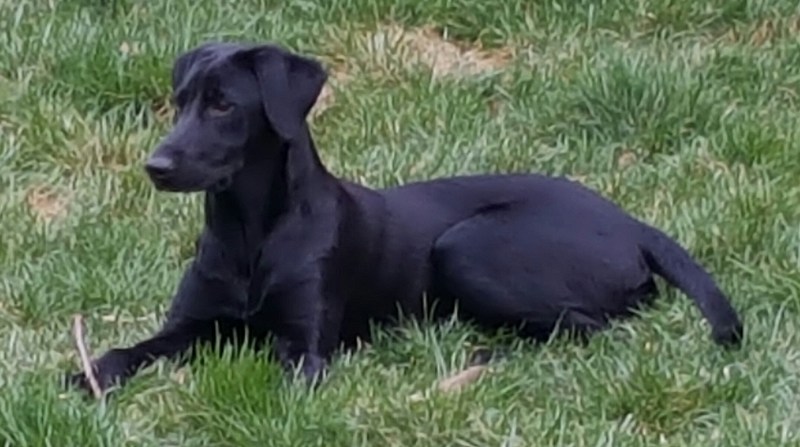
Steadiness is the skill for a retriever to wait unless and until sent on a retrieve. In competition, it occurs in two situations: as the working dog, when the dog is watching marks being thrown and can’t begin to retrieve them until the judge permits it; and as the honor dog, when watching another dog, typically the next dog in the running order who is now the new working dog, from the honor position a few yards from the start line.
Although I have no direct experience with hunting, my understanding is that steadiness is invaluable in a hunting situation. It prevents the dog from causing an untimely disturbance that might lead to lost opportunities, it prevents dog fights that might occur if dogs decided on their own to go after the same mark, and it keeps the dogs out of harm’s way while guns are being fired.
I also understand that steadiness is so prized in a hunting dog that some trainers develop a high degree of steadiness before they allow a puppy to even begin learning to retrieve.
That is not, however, the prevailing view for training event retrievers. For example, an unsteady dog can earn a WC in the retriever breed clubs such as the GRCA and LRC; can earn an AKC Junior Hunter title; and can compete in the Unsteady class for club competitions.
This is not to say steadiness is necessarily unimportant for a competition retriever. It depends on the level of competition. An uncontrolled break, where the dog ignores a recall cue from the handler, results in disqualification in all events that require steadiness, and even a controlled break, where the dog breaks but then comes back to the start line before getting very far, is a DQ in the more advanced stakes. In a field trial Qualifying stake, the working dog can have a controlled break, but since you can’t talk to the honoring dog, any break from honor knocks you out. At least that’s how some judges rule.
The structure of Mike Lardy’s TRT program is consistent with the view of steadiness as an essential skill but not one of the first ones developed. He does, however, include “Introduction to Lead Steady” as one of the last items in the section Socialization and Introduction to Field in his TRT Flow Chart. Accordingly, I also include it in Stage 1 of the PRT program I’m developing.
By lead steady, I take it that Mike means the dog is physically restrained from breaking by a lead. Since he calls the item “Introduction to …”, I take it that he doesn’t prevent breaking throughout this phase of the dog’s training, but at some point introduces the concept by preventing breaking with a lead in a few marking and/or honoring situations.
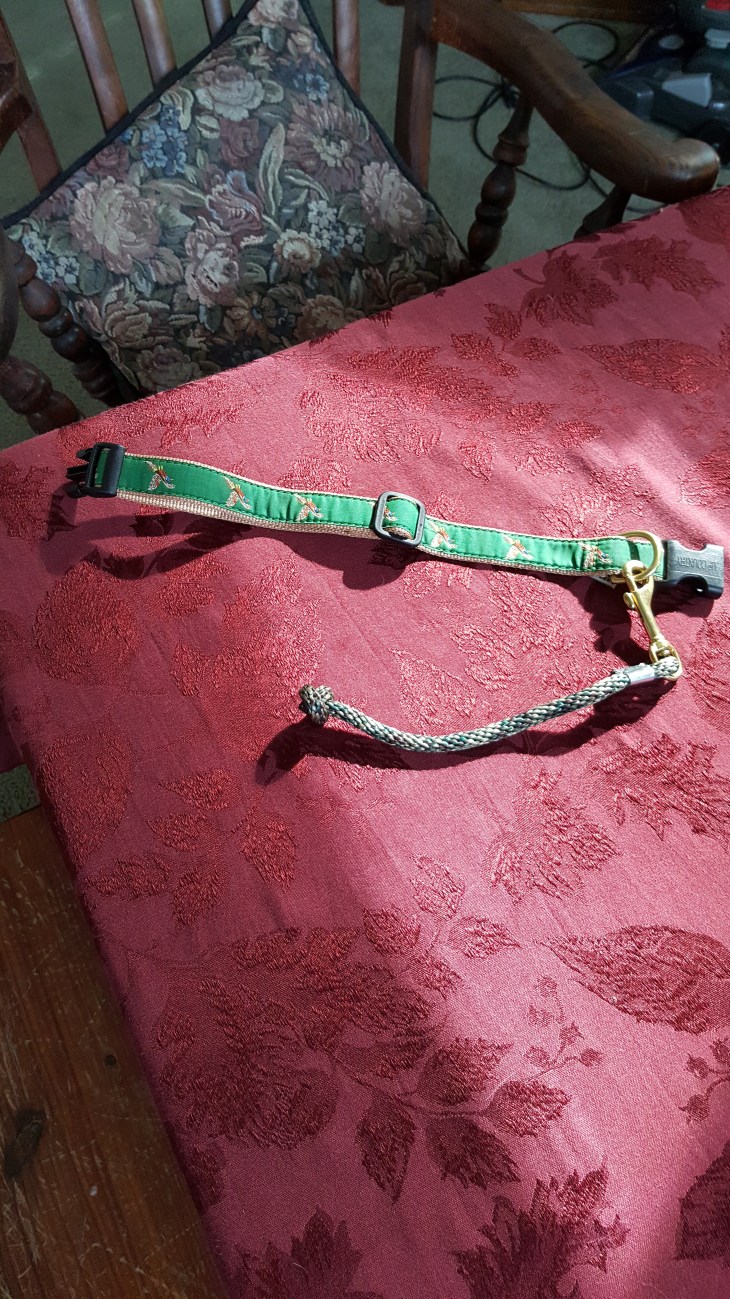
I’m not sure what kind of lead Mike uses, but my Goldens were trained steadiness with a short lead, called a tab, attached to their flat collars. That’s how I’ll train Lightning as well. I buy tabs online and tie a knot at the end to shorten them so they won’t catch in the dog’s feet. Here’s a picture of a tab attached to Lightning’s collar:
Most of this post pertains primarily to the steadiness training we’ll be doing in Stage 2, but a tab is also used in Stage 1 for introducing the concept of steadiness.
It’s important that the dog not associate the fact that he/she is wearing a collar and tab with fact that he/she cannot break. Of course that’s elementary physics, but dogs don’t understand physics. As far as they can tell, some invisible force field is preventing them from breaking unless and until they are released.
It’s important that you retain that illusion, because if the dog comes to understand that the only time a break is impossible is when that collar is on, you’ve got what’s called a test-wise dog. That’s a dog who performs well in practice, eliminating the opportunity for corrective measures by the trainer, but then performs incorrectly in events when conditions are different, such as the fact that the dog is not wearing a collar, since collars are not permitted when dogs are under judgment in steady stakes. It’s a difficult problem to fix.
One way to help prevent the dog from being aware of the collar and tab is for the dog to wear the equipment in training even when you’re not working on steadiness. That doesn’t mean that the dog necessarily always wears those items, but only that he/she wears them often when no steadiness work is done. Dogs are superb discriminators, and this method takes away the dog’s opportunity to make the connection between the collar/tab, and the invisible force field as the dog experiences it.
A second way to prevent the dog from making that connection is to keep the tab’s length loose while retaining a tight grip on the end as the dog awaits throws from the gunner. If the dog remains steady, he/she is never aware the tab is there. If he/she attempts to break: you hold on tight; the tab instantly becomes taut before the dog can get further than a few inches; and the illusion of the invisible force field is born.
In Stage 2, I’ll work on Lightning’s steadiness so that no break ever occurs once I begin that training. Based on the experience of many other trainers as well as my own, eventually Lightning will become reasonably steady with that training. Perfection may actually not be achievable, at least for some dogs or perhaps without an unacceptable cost. In fact, they say there are only two kinds of dogs running in field trials: those who have broken, and those who will break.
As for Stage 1, I am not willing to risk detracting in any way from the process of Lightning discovering in himself an ever-deepening love of retrieving, which is my overarching goal for this phase of his life. And I believe a number of requirements for competition, such as deliver-to-hand and steadiness, take exactly that risk. So I’m mostly deferring those skills till Stage 2, by which time his love of retrieving will have fully blossomed.
But in our yard, I’ve begun to set up a few low stress retrieves that introduce lead steadiness. With Lightning wearing his collar and tab, I put Laddie and Lightning both into a sit and I throw a bumper, preventing Lightning from breaking by holding onto the tab. When he relaxes, I drop the tab and release him with “Lightning”.
As an aside, it’s common practice to send the dog on a mark using the dog’s name. If you call the working dog’s name, then the trained honoring dog, in this case Laddie, knows he is not being released.
Anyway, after Lightning returns with bumper, I again take his tab but try to hold it so he cannot feel that I’m holding it. With both dogs once more in a sit, I again throw the bumper, this time calling “Laddie”. If Lightning tries to break, I hold tight onto the tab and he is unable to move from his position. In this way, he is receiving an introduction to honoring after running a mark, as well as to lead steady.
I don’t intend to do much of this in Stage 1. But doing some of it at this point helps my PRT program conform to Mike’s renowned TRT program, and will hopefully pay off in Lightning’s overall development.
Update: In practice, I found that by the end of Stage 1, using the tab to prevent a break on gunner-thrown marks showed no risk of diminishing Lightning’s motivation. In fact, he quickly stopped trying to break on the gunshot, and sometimes didn’t try to break at all. Yet when sent on his name, he raced out with his usual enthusiasm, picked up the bird or bumper, and raced back. Accordingly, whoever is handling him at our practices these days always holds his tab while the marks are being thrown. I suspect he won’t need to be held, at least for bumpers, before long.
However, I rarely have the resources to set up an honor for Lightning, so we will defer that work to Stage 2.
 Lightning's Journal