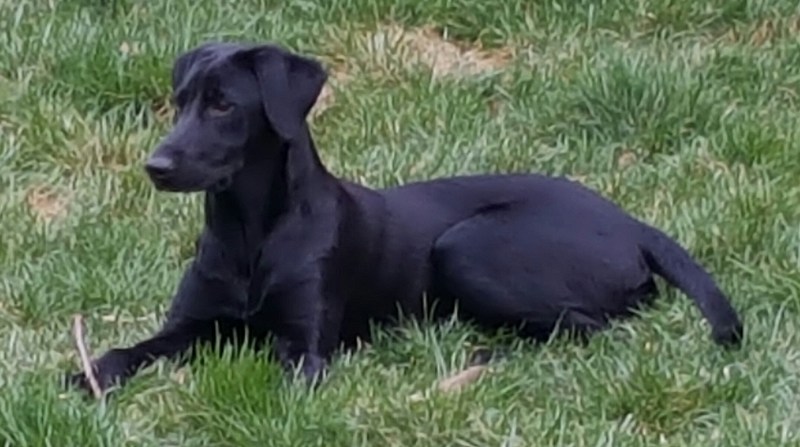
As we’ve discussed, PRT Stage 2 follows Mike Lardy’s TRT Basics model of parallel training in yard work and field work. In TRT, that’s reflected in the TRT Flow Chart, the TRT video program, and the the TRM program, all key resources for the PRT program.
Lightning and I are now entering exciting new ground in both the yard and field progressions. As discussed in the previous post, it’s time to begin simple casting in the yard work.
On the field work side, we’re now ready to begin training doubles. Mike’s TRM program, including both the video segment on Doubles and the manual thru page 24, describe and illustrate the training process.
The only differences for the PRT program are these:
- Obviously no collar, no collar conditioning, and no collar corrections or any other physical corrections. At this stage Mike only suggests a collar correction as an option for remedying a no-go anyway. I have never had a dog no-go at a training day or competition so I’m not an expert on dealing with the problem, but I believe Mike’s general explanation that such difficulties indicate you are trying to push the dog too fast is sage advice. In a word, back off. Work more on the Stage 2 skills you’ve already taught, and keep working on them till they’re easy, automatic, virtually reflexive for the dog. Then gradually move forward in the training progression, never skipping any steps.
- In Mike’s videos, as reflected in his flow chart, the dog at this stage is still learning steadiness on a taut lead. In PRT, I don’t suggest ever using a taut lead, but instead suggest having the tab loose on every mark unless the dog tries to break. Only then does the tab become taut. As an example of how this is working, Lightning is completely steady quite often on gunner-thrown marks now, so he has little awareness that any relationship exists between being steady and wearing a tab. I believe that will pay off when, someday, he needs to be steady in competition, where he’ll be required to run with no collar. But by then, hopefully he’ll have been steady in training for a long time.
- Mike’s material contains so much invaluable information that I’m reluctant to highlight any particular point for fear of inadvertently implying the other ideas are less important. But I don’t think it can be overstated that the dog should not be running a high percentage of doubles at this stage. Mike suggests no more than one in three multiple setups. He mentions one symptom of running too many multiples — head swinging — and the way to avoid the issue, and for that matter address it if it develops: running mostly singles off multiple guns. But just as importantly, running singles off multiple guns strengthens the dog’s marking in other ways besides teaching the dog not to head swing. Multiples are fun, challenging, and interesting, but pin-point marking is the foundation for a dog’s success in competition, and running singles off multiple guns is the tool to use throughout the dog’s career to continuously strengthen that foundation.
Lightning has been delivering to hand in our field work as well as yard work for several weeks now, so requiring delivery to hand, as Mike’s materials indicate, won’t be a change for Lightning and me in the field. However, now I’ll routinely have Lightning come to heel and sit before taking the bird, practicing both sides to keep them balanced. A dog is not required to come to heel for a competition delivery, but as Mike shows, it’s part of sound line mechanics when running the memory birds of a multiple. I’ve heard that Mike actually takes the last bird of a series from front position as the dog is approaching in competition, a way of letting the dog know that’s the last bird of the series. That’s not a universal practice, but I like it, though delivery at heel is also attractive.
Another issue is how to train doubles alone or with just one assistant. Certainly there’s no substitute in running doubles for going out with two gunners whenever possible. But since Lightning knows how to run a poorman single, we can put that skill to use to train doubles, too, using a modified version of the same three steps you’d use with two gunners:
- Bird-in-mouth: With a single gunner, you’d walk out to a stickman, throw the first single, walk back to the dog, send the dog to pick up the single you just threw, have the dog come to heel and hold the bird while the gunner throws the second mark, take the bird, and send the dog to pick up the second mark. Working alone, you’d walk out to one stickman, throw the first mark, walk back and run the dog on that mark, bring the dog to heel and facing a second stickman, take and discard the bird behind you, walk out and throw the second mark, walk back, and send the dog to the second mark. This loses the dog’s opportunity to watch a throw while holding the bird, but the dog still practices coming to heel to deliver and then (after a delay) watch the next throw. I think that having the dog hold a bird or bumper all that time would not be particularly beneficial, and could potentially be counterproductive to good mouthing habits.
- Throw memory bird as a single first, then run the double: With a single gunner, first have the dog run that mark. Then, have the same mark thrown again, leave the dog in a sit at the start line, walk out to a stickman and throw the second mark, go back to the dog and send for the second mark, and finally send for the memory bird, that is, the mark the gunner threw before the poorman mark. Working alone, throw a poorman single, then throw a poorman double with two stickmen, reiterating the single as the first throw and the last bird picked up. Without gunners it’s hard to get much distance and you don’t have anyone to help, so poorman doubles are a weak substitute for training with at least one gunner, and preferably two, but if the dog can do them, they do strengthen the dog’s concept of a double.
- Simple double. This is the same as the previous step but without throwing the single first.
As I’ve mentioned before, I avoid training with launchers, but many fine trainers user then when gunners aren’t available. I just can’t make any recommendations for using them effectively.
So now Lightning and I have our work cut out for us for some time to come. In our yard work, we’ll be working on simple casting, and in our field work, we’ll be working on singles off multiples as well as doubles. In both cases we’ll also continue to practice and strengthen all our previous Stage 2 skills. I expect that Lightning will turn 8mo before we go onto the next steps in our program.
 Lightning's Journal