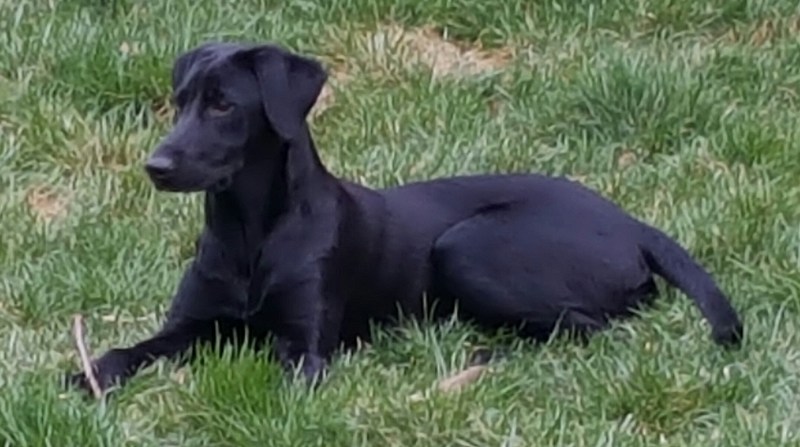
A couple of old internet acquaintances were kind enough to tag me in a Facebook thread and invited me to say something about the challenges of winning a retriever field trial. I thought I’d pass the posts along here:
Patrice Dodd: You should see if you can find Lindsay Ridgeway’s blogs. He has trained Golden Retrievers to Master Hunter level and has won JAMs in field trials, in the USA. All positive trained. He has adapted Mike Lardy’s program with significant modifications.
Greta Kaplan: I have known Lindsay for ten years or so. So far he’s not winning field trials and that is the key point here. He is aware of this discussion, I promise.
Me: I trained Lumi to JH, SH, WC, and WCX. She was a fabulous marker and often lined blinds. She took First in the first competition she ever ran in. I trained Laddie to JH, SH, MH, and WCX. He took First in both of the first two competitions he ever ran in. He received a JAM in his very first field trial, when he was still three years old. He’s since earned many more JAMs and Reserve JAMs, and took Third in a trial with 33 dogs last fall, mostly professionally trained and many being handled by pros as well. He is a superb marker. Many friends with more accomplished pro-trained dogs have told me they consider Laddie more talented. But by all means, let’s focus on what my dogs haven’t achieved yet.
Greta: Sorry, Lindsay Ridgeway. That was not my intent. I tagged you in the other thread because I knew you were out there doing it. I have to admit here that I have no understanding of the titling structure for field trials so it’s hard for me to know how truly competitive those things are. Are there levels of competition? What are the top awards?
Seriously, no slight was intended.
Me: Thanks so much for tagging me. Very interesting to me. Yes, four main kinds of FT stakes: Derby: for dogs under 2yo, no handling allowed, specialized, difficult marking tests, not interesting to me Qualifying, also called qual/Q/minor: open if dog has not won two of them, same skills as all-age, usually a bit easier on average, some all-age options never occur in Q. Tasks: land and water multiples, usually triples, plus land and water blinds. All-age, separated into two stakes, Amateur (am) and Open. Same dogs, but handler cannot be a pro trainer in the am. Most dogs in all stakes are trained by pros. Placements in all stakes are dominated: pros (except am stake), field trial property owners, multi-dog amateurs who travel south for winter training, north for summer training. Despite quality breeding and pro-training, many dogs never finish a trial or earn a JAM.
I would say greatest challenge to finishing a stake is difficulty of stake itself, though I think some politics involved. Greatest factors to one of four placements, especially First and Second (which in Q earns unofficial designation Qualified All Age QAA): handler often has hundreds, possibly thousands of stakes under belt; handler often running multiple dogs, essentially do-overs; unfair situations for some dogs, such as change of wind or unintended help by gunner, but part of the game, evens out over time; few would deny politics sometimes involved, that is, personal relationships. Deciding factors in this order, I think: experience of handler, breeding of dog, training of dog, running order; even luck sometimes important. Not sure whether breeding or training more important, both crucial, but both less important than handling skill/experience in general.
So with respect to a positive trainer winning, so many issues besides whether you use aversives, such as: do you have: Group A: time to train hours every day for years on end, tolerance for intense physical and emotional demands, pretty serious money including high quality trial-bred dog. Group B: opportunity to travel south for winter, north for summer, opportunity to run multiple dogs in a stake, good social skills, other mysterious factors I haven’t discovered yet. Groups A and B both crucial. Laddie and I only have Group A. Many people have told me what Laddie has accomplished is amazing.
So yes, it’s somewhat harder and more time-consuming to train without aversives. No videos or programs available for positive advanced competition training except the PRT program I’m developing in Lightning’s Journal. But too many other crucial factors to prove that a dog trained that way can’t win. Most dogs can’t win even with traditional training.
Virtually all pros and experienced trainers believe it would be impossible for positive-trained dog to win, which cannot be discounted; they should know. But they also don’t believe a positive- trained dog can earn an SH, MH, Q JAM, Q Reserved JAM, or Q Third, and Laddie has done all of those, so puts their ability to predict in question. I’ve probably run out of time with Laddie. He’s almost 10yo and I have health problems that limit our training right now. But I think Lightning will finally get that win some day if Laddie doesn’t beat him to it.
Oh, I forgot to mention huge importance of access to quality field trial grounds for practice several times a week plus training group with experienced, successful trainers willing to share knowledge. I use paid assistants, generally high school kids. We usually train at construction sites or parks till we get kicked off. Slight difference from pros with multiple high-quality properties in North and South for year-round training, plus experienced training assistants and large community of peers who have used virtually identical training programs for success with many dogs. As far as I know, no one else in America is doing what I’m doing. Maybe some will and Lightning’s Journal would save them a lot of missteps, but it’s a long road.
Greta: THANK YOU for filling that in.
 Lightning's Journal
Lindsay, thank you SO MUCH for writing this article. I think you’re absolutely dead on about the difficulties inherent in the sport for ANYONE to win, which makes it all the more difficult for positively trained dogs to do it. Without the knowledge, interest, money, time, human helpers, equipment, facilities, AND line-bred dog, it’s pretty much impossible.
What you have accomplished is a MAJOR contribution to positive training. Thank you for sticking to it, and I truly hope you get that win soon! Give Laddie and Lumi hugs from me.
LikeLiked by 1 person
Lindsey
You have always worked at this application of positive response. I will admit at times it works perfectly.
We both had our opinion change when we were training together.
Behavior of our dog partners has never cease to amaze me.
You have accomplished a lot with your training methods and you have the ribbons and the titles to prove it
LikeLike
I learned so much training with you, David, and really miss it. Wish you could see Laddie again, and now little Lightning, too. Maybe someday, I hope.
LikeLike
I’m curious as to why you cannot train year round in the south? I train vizslas for North American Versatile Hunting Dog Association. We train for duck search all summer. It is too hot to run them upland without water, but we can do water work. The difficulty in FL is access to water that is monitored for alligators daily. Of course a gator can always show up that nobody saw yesterday, but its safer on water someone checks daily. So why not work water year round in the south?
LikeLike
Hi, Diane. We’re not in the south, we’re in Maryland. Water too cold before April, snow on ground much of the time, dangerous to run dogs on ice. Temps here this summer have reached 80s by mid-morning, too hot for land work and no technical water nearby. By afternoon often in 90s, too hot even for water work. Even if it doesn’t kill the dogs, they perform poorly.
I don’t know why field trial pros and serious amateurs go south in winter and north in summer, but it’s a hassle so I assume they have their reasons. I doubt it’s just gators. Maybe field trial training is different from duck search training.
LikeLike